
Last updated October 15, 2026
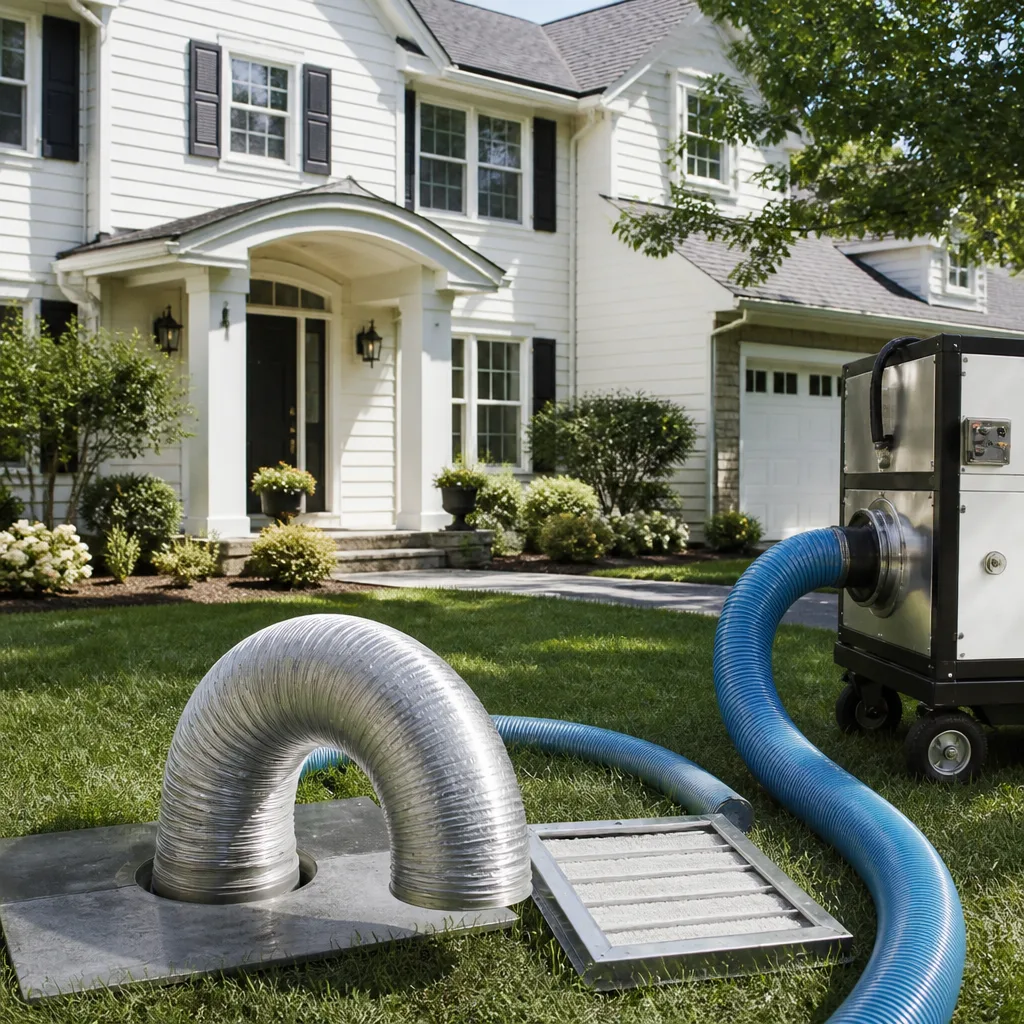 Whole-home duct cleaning
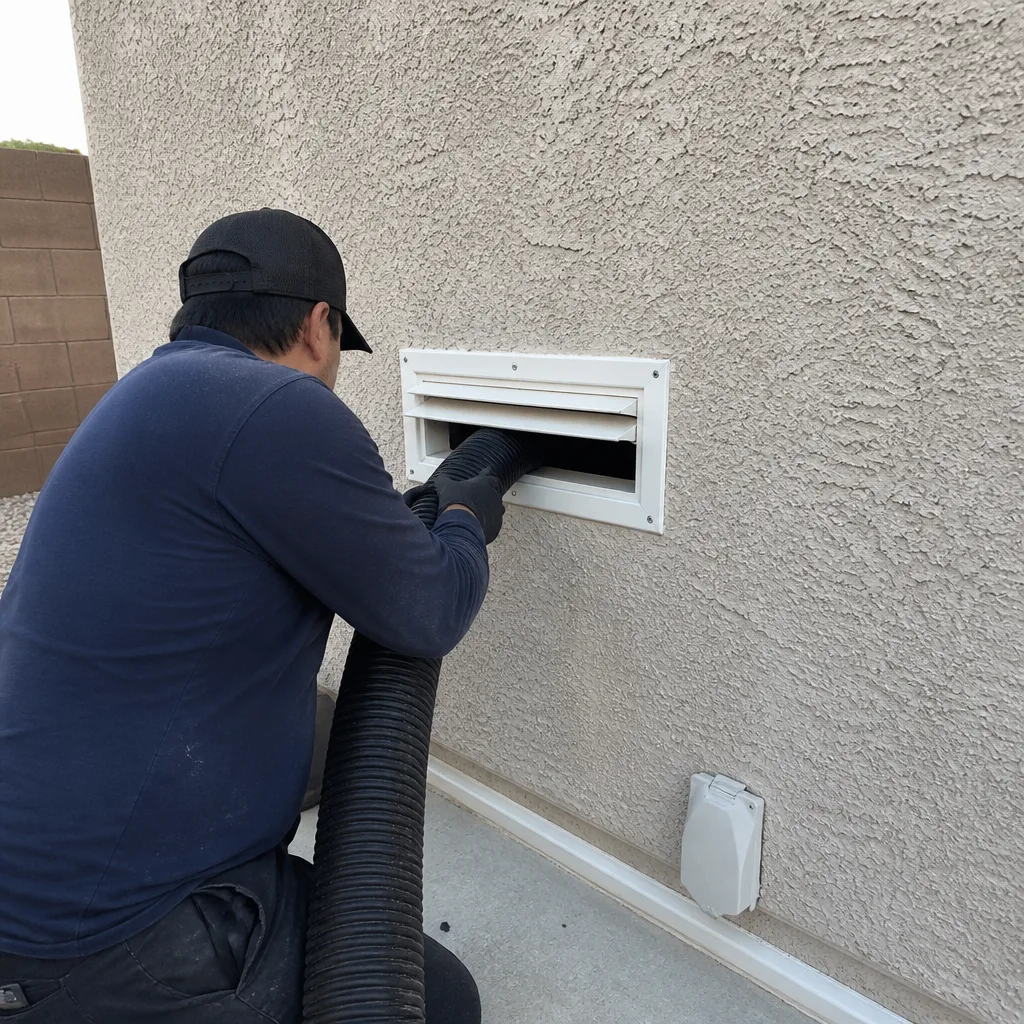
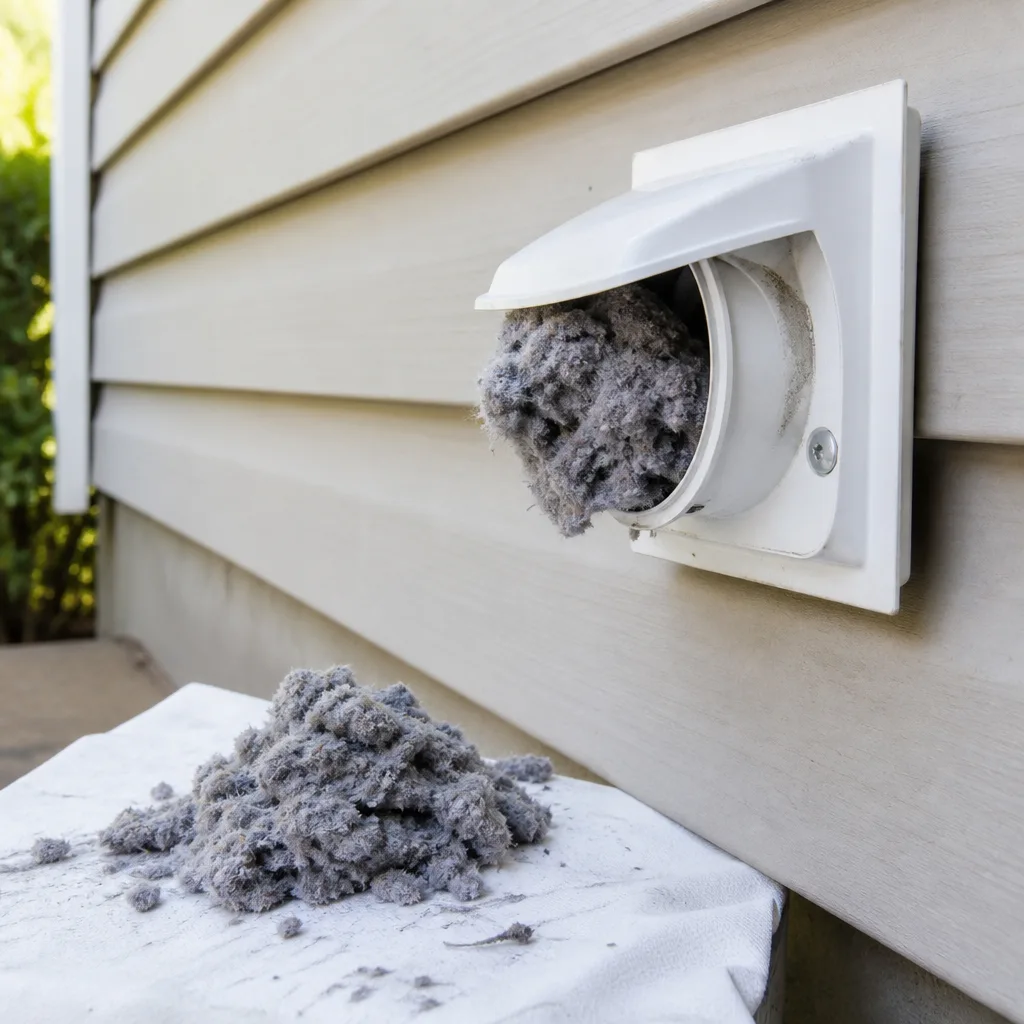 Dryer vent cleaning
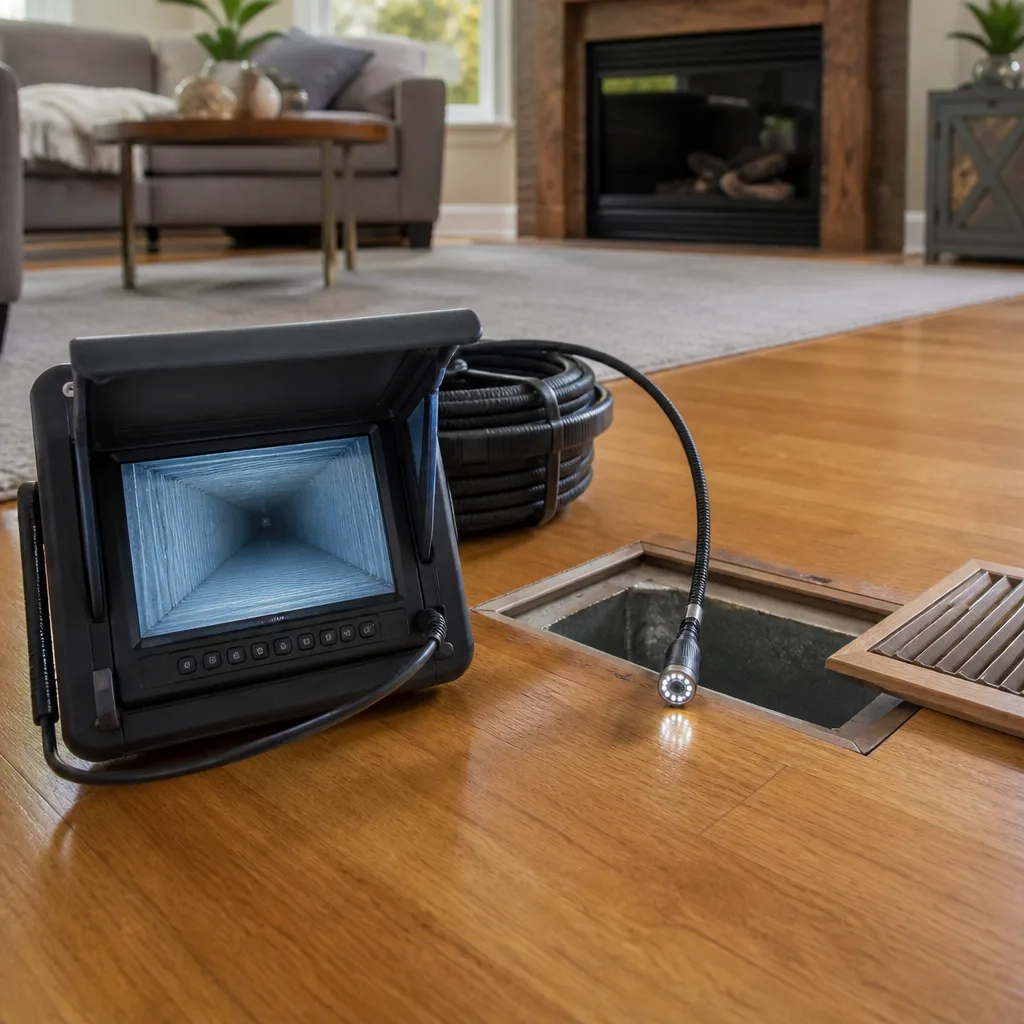 Camera inspection
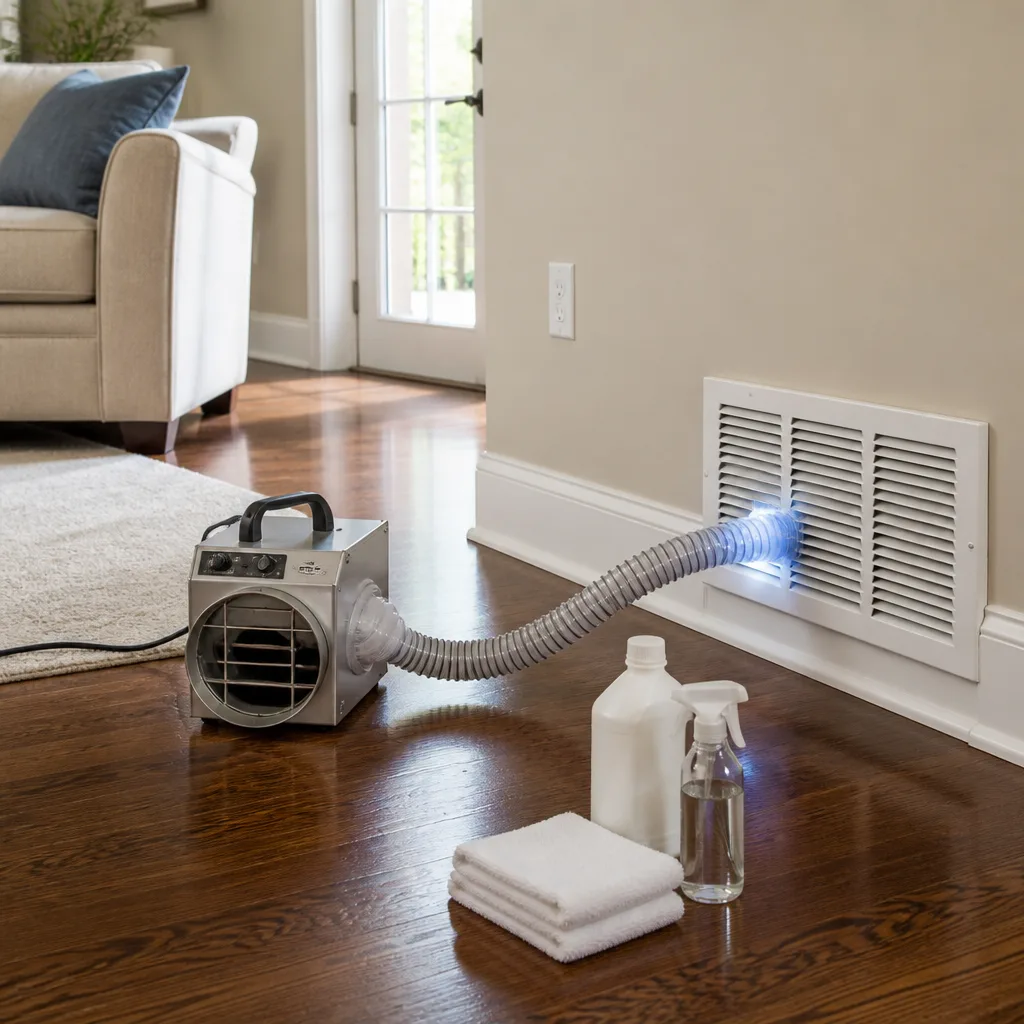 Sanitizing & deodorizing
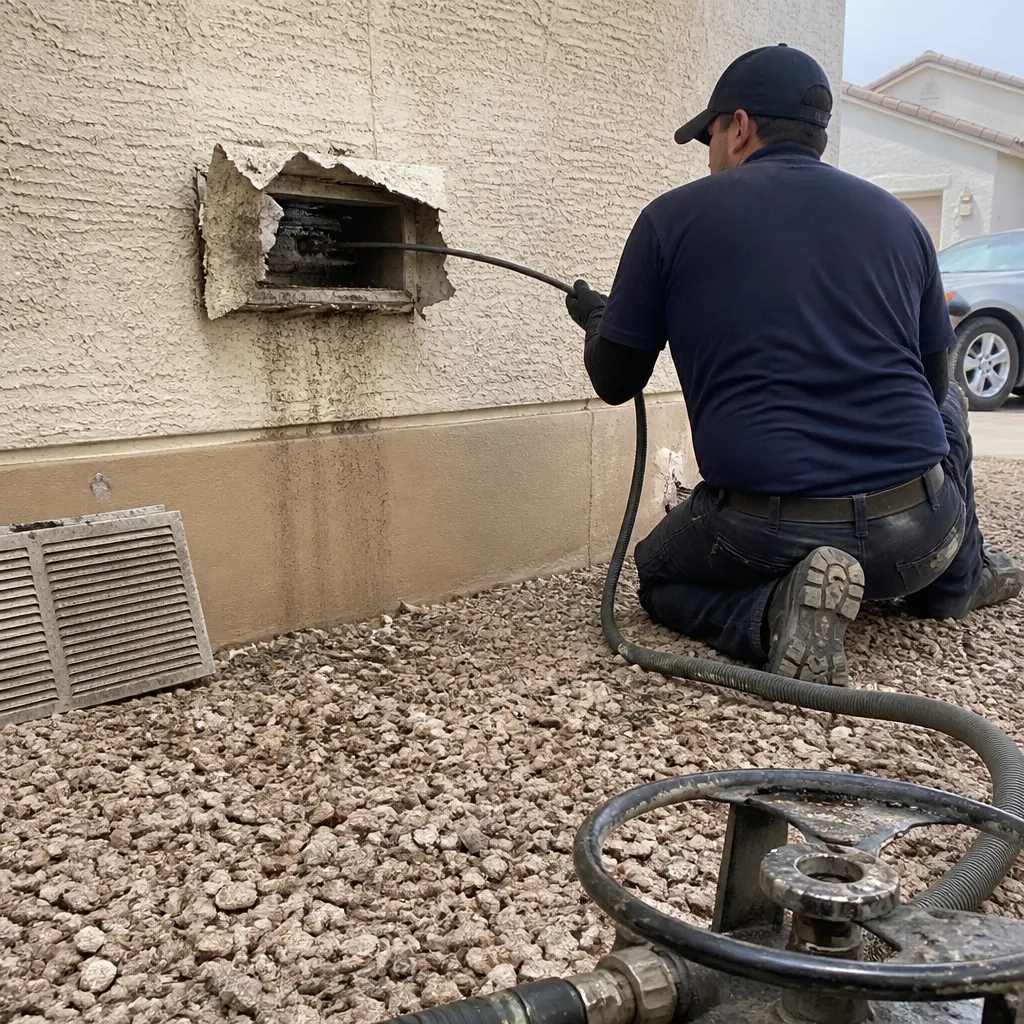
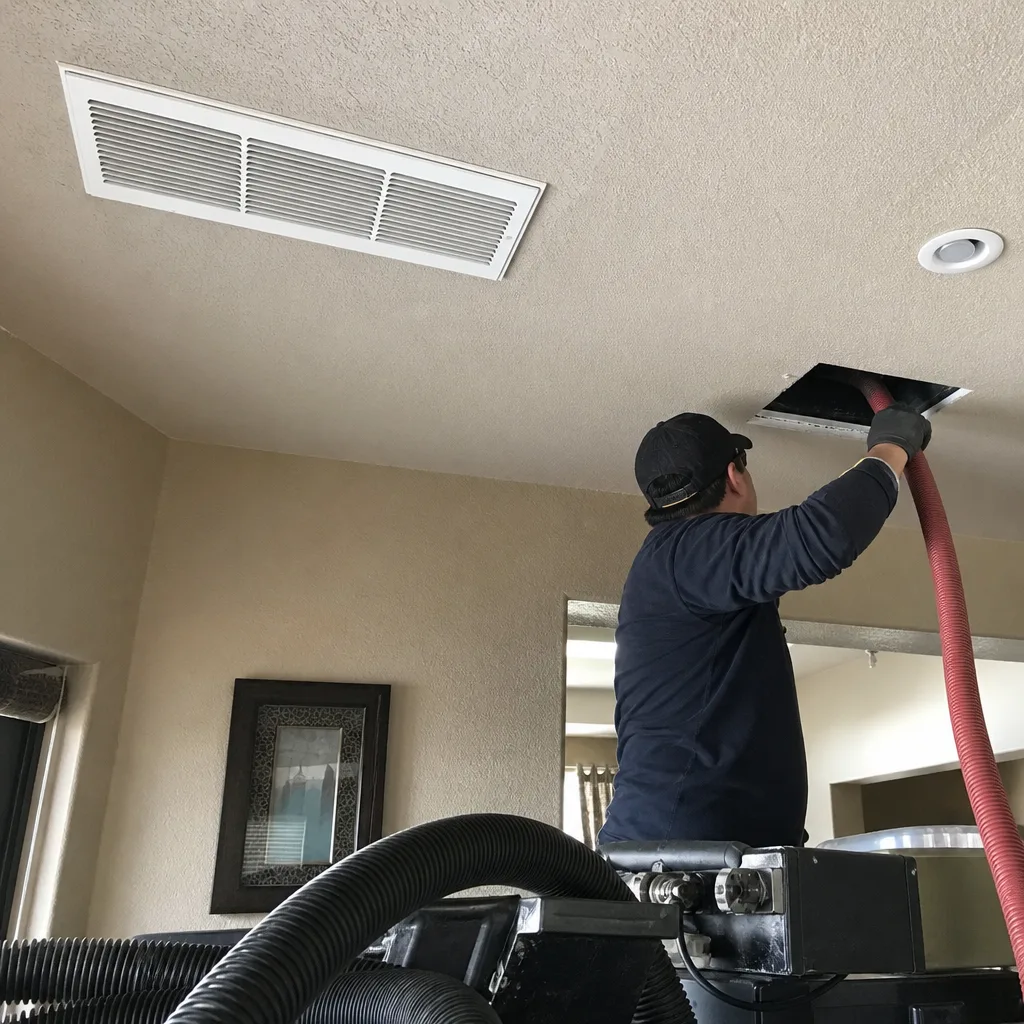
Whole-system duct and dryer vent check with before-and-after photos - you see exactly what came out of your vents
That "$99 whole-house special" is a bait ad - the real number appears once they are in your hallway, or the "clean" is a shop-vac at the register. We photograph the inside of your ducts before and after instead.
Air Duct Cleaning Maintenance Checklist for Henderson Homeowners
An HVAC system in Henderson pushing cool air through its ducts in August can cycle that air more than 150 times in a single day. Run those numbers across a single cooling season and you’re looking at tens of thousands of cycles, each one carrying dust, desert grit, and whatever else has settled in your ductwork. Yet most homeowners can’t tell you the last time their ducts were cleaned, what the technician used, or whether the price they paid was for a full job or a partial one. This guide is a task-by-task record-keeping tool built around Henderson’s actual HVAC duty cycle, so you can track what was done, when, and by whom, and use that history to make smarter decisions instead of guessing.
Styles & brands we work with
Quick Answer
An effective air duct cleaning maintenance checklist for Henderson homeowners has three parts: a monthly filter inspection and replacement log, a semi-annual visual check of registers and returns tied to the spring and fall shoulder seasons, and a professional Air Duct Cleaning every 3 to 5 years, documented with the date, method, company name, and guarantee terms. The most important tool isn’t a reminder app. It’s a written log that turns your ductwork from an unknown into a recorded asset.
Table of Contents
- Why a Checklist Matters More in Henderson Than Almost Anywhere Else
- What to Track, and What to Write Down
- Monthly Tasks: The Filter Log
- Semi-Annual Tasks: The Shoulder Season Inspection
- Annual Tasks: The Deep Review
- How to Log a Professional Cleaning
- Using Your Log When Getting Quotes
- Common Mistakes to Avoid
- When to Call a Professional
- Frequently Asked Questions
- The Bottom Line
Why a Checklist Matters More in Henderson Than Almost Anywhere Else
Henderson sits in the Mojave Desert, which means your HVAC system faces a workload most of the country never sees. Summer highs routinely pass 105°F, and your air handler runs for hours at a stretch just to hold a 78°F setpoint. That’s not a design flaw. That’s the reality of cooling a home in the Las Vegas Valley, and it directly affects how fast dust, lint, and micro-debris accumulate in your ductwork.
The desert also adds something many national maintenance guides ignore: blown-in dust that’s finer and more abrasive than the household dust found in wetter climates. In neighborhoods like Green Valley Ranch, Anthem, and MacDonald Ranch, landscaping with decomposed granite and exposed soil puts a constant fine grit into the air. Your filter catches some of it. The rest moves through the return, into the plenum, and settles along the duct walls. A checklist that doesn’t account for this specific dust load is just a generic calendar.
We’ve walked into Henderson homes where the filter hadn’t been checked in a year and the return grille looked like it was wearing a felt coat. The system still ran. The homeowner still felt “fine.” But the air handler was working against a growing restriction, and the duct interior was slowly accumulating material that would eventually become visible around the registers. A written checklist catches that progression early, before it becomes a repair bill.
What you’ll learn in this guide:
- The exact items to inspect monthly, semi-annually, and annually, tied to Henderson’s cooling and heating load peaks
- Which MERV ratings actually make sense for this dust environment, and which ones cause more problems than they solve
- How to document a professional cleaning so you have a real record, not a vague memory of “some guys came by a few years ago”
- How a maintenance log changes the dynamic when you’re getting quotes from duct cleaning contractors in Henderson
What to Track, and What to Write Down
Your log doesn’t need to be fancy. A notebook, a notes app on your phone, or a simple spreadsheet works. What matters is that you write the same fields every time. The discipline of writing things down is what turns a “checklist” from a vague idea into a tool you can actually use.
Every entry should include:
- Date. Not the month. The date.
- Task performed. Filter changed, grille wiped, duct interior inspected, professional cleaning completed.
- What you saw. Dust level, moisture staining, pest evidence, odor, airflow change.
- Filter details. Brand, size, and MERV rating of the replacement filter.
- Action taken or needed. “Replaced,” “Wiped and reseated,” “Schedule professional cleaning in spring,” etc.
- Who did it. You, or the company name and technician name if it was a pro.
Here’s what a real entry looks like:
Sample log entry:
- Date: March 14, 2025
- Task: Semi-annual return grille inspection
- Findings: Visible dust accumulation on return grille in upstairs hallway. Dust film inside duct boot extends about 2 inches past the grille frame.
- Filter: Honeywell 16x25x4, MERV 11, installed Jan 2025, still clean to visual inspection
- Action: Wiped grille and boot with damp cloth. Logged for comparison at fall inspection. No immediate service needed.
That’s a record. Three years from now, when a contractor tells you your ducts are “severely impacted,” you can open your notebook and check whether that claim matches your own documented observations. Most contractors aren’t trying to mislead anyone. But the trade has a reputation in some corners, and a written history is the best defense against a moving target.
Monthly Tasks: The Filter Log
Your monthly task is simple: check the filter, and write it down. In Henderson, a 1-inch fiberglass filter may load up in as little as three weeks during peak cooling season, even if the manufacturer says it lasts 90 days. That 90-day rating assumes a typical national climate, not 110°F days with the blower running at full duty.
What to do each month:
- Locate the filter. Most Henderson homes have it in one of three places: behind a return grille in a hallway or ceiling, inside the air handler cabinet, or in a filter slot at the return plenum.
- Pull it out and hold it up to a light. Can you see the bulb clearly through the media? Replace it if the material looks dark, caked, or noticeably denser than when new.
- Note the condition in your log. Write “clean,” “moderate,” or “dirty” along with the filter’s MERV rating and size. This builds a baseline for future months.
- Inspect the filter frame for gaps. If the filter is loose in its slot, air bypasses the media entirely. A crooked filter is a dust highway.
- Replace if needed, and write the date on the filter frame itself with a permanent marker. This is the habit that changes everything: your ductwork’s maintenance history becomes visible on the component itself.
What MERV Rating Should Henderson Homeowners Use?
The Mojave dust is fine. That means a very high MERV filter, like MERV 16, can clog exponentially faster here than in a humid climate. A clogged high-MERV filter chokes your system, raises static pressure, and can freeze the coil in the middle of August. We recommend MERV 8 to MERV 11 for most Henderson homes. MERV 8 catches the desert grit and most lint. MERV 11 adds capture of fine particles under 1 micron, which matters if you have allergies or a dusty neighborhood. Above MERV 11, you’re often buying more restriction than benefit unless a specific medical need exists.
Write the MERV rating down every time you change the filter. If you experiment with a higher MERV and notice your system short-cycling or the coil icing up, your log will show the correlation immediately. That’s the difference between guessing and knowing.
Semi-Annual Tasks: The Shoulder Season Inspection
Henderson’s cooling season runs roughly April through October, with peak load from June through September. The heating season is shorter, usually December through February, and many systems are heat pumps rather than gas furnaces. That gives you two natural inspection windows: spring (March to early April) and fall (October to November), before each season’s load really hits.
During each shoulder-season inspection, walk the house and examine every register and every return grille. That means bending down and looking at them, not glancing from across the room.
- Remove each register cover and look inside the boot. Use a phone flashlight. You’re looking for dust that has accumulated on the boot walls, which signals what’s moving through the duct interior.
- Wipe down the register cover and boot with a damp microfiber cloth. Don’t shove the cloth into the duct. Just clean what you can reach.
- Check for signs of moisture. Dark staining, rust, or water marks on the boot or the ceiling around it indicate condensation or a leak. Log it and address it. Ducts and moisture don’t mix.
- Sniff. A musty, stale, or burning-dust smell when the system first kicks on after a season points to accumulated debris in the air handler or the ducts.
- Listen. If a register whistles, or if you hear rattling that changes with airflow, note it. Loose duct fittings allow dust entry and lose conditioned air into the attic.
- Write down anything unusual in your log. Even a simple “no change” is a useful data point.
What You’re Looking For: Signs That Move the Professional Cleaning Up
Certain findings during a routine shoulder-season inspection should trigger a call sooner rather than later:
- Dust accumulating on register blades within days of wiping them
- Visible dust, hair, or debris inside the duct boot beyond the first inch
- Airflow from one room that is noticeably weaker than the others, with the damper open
- Recurring dust on surfaces within 48 hours of cleaning the house
- Any moisture staining, mold smell, or evidence of rodents or insects in or around the registers
If you see any of these, the professional cleaning moves up. Don’t wait for the next 3-5 year interval. In our experience, a system that’s showing these signs in Henderson is usually already carrying enough material to justify a full negative-air cleaning.
Annual Tasks: The Deep Review
Once a year, set aside 30 minutes to review your full maintenance log and make decisions about the upcoming season. This is the “annual review” step that turns monthly and semi-annual habits into a real record-keeping system.
Here’s the annual sequence:
- Review the full year of filter entries. How many filters did you actually go through? If you replaced monthly during summer and not at all in winter, that’s normal. If you replaced once all year while running the AC hard for five months, you probably under-serviced the system.
- Compare semi-annual inspection notes. Did the dust accumulation increase between spring and fall? If the return grille was clean in April but coated by October, your home’s dust ingress rate is high, and sealing return leaks might be the next logical step.
- Check the age of your last professional cleaning. If it’s been 4 years or more, schedule it. If it’s been 2 years but your log shows worsening visual dust at every inspection, schedule it sooner.
- Look at your energy bills for seasonal anomalies. A system fighting a clogged coil or restricted return runs longer to hit the same temperature. Your log gives context to what the utility bill shows.
- Photograph anything that looks like staining, pest activity, or dust buildup before you clean it, so you have a visual record.
- Put the next inspection dates in a calendar, not in a drawer. March 15 and October 15 work well for Henderson’s climate rhythm.
This annual review is where the checklist earns its keep. A homeowner who does this for three consecutive years has more useful data on their duct system than most HVAC companies can pull from a single visit.
How to Log a Professional Cleaning
When you do schedule a professional air duct cleaning in Henderson, the log entry should be more detailed than any other task. Most homeowners remember the price. Almost none can tell you the method used, the scope of the job, or what the guarantee actually covers.
Here’s what to write down when the job is done:
- Date of service. Keep the invoice with your log.
- Company name and technician name. You should be able to tell who walked into your home.
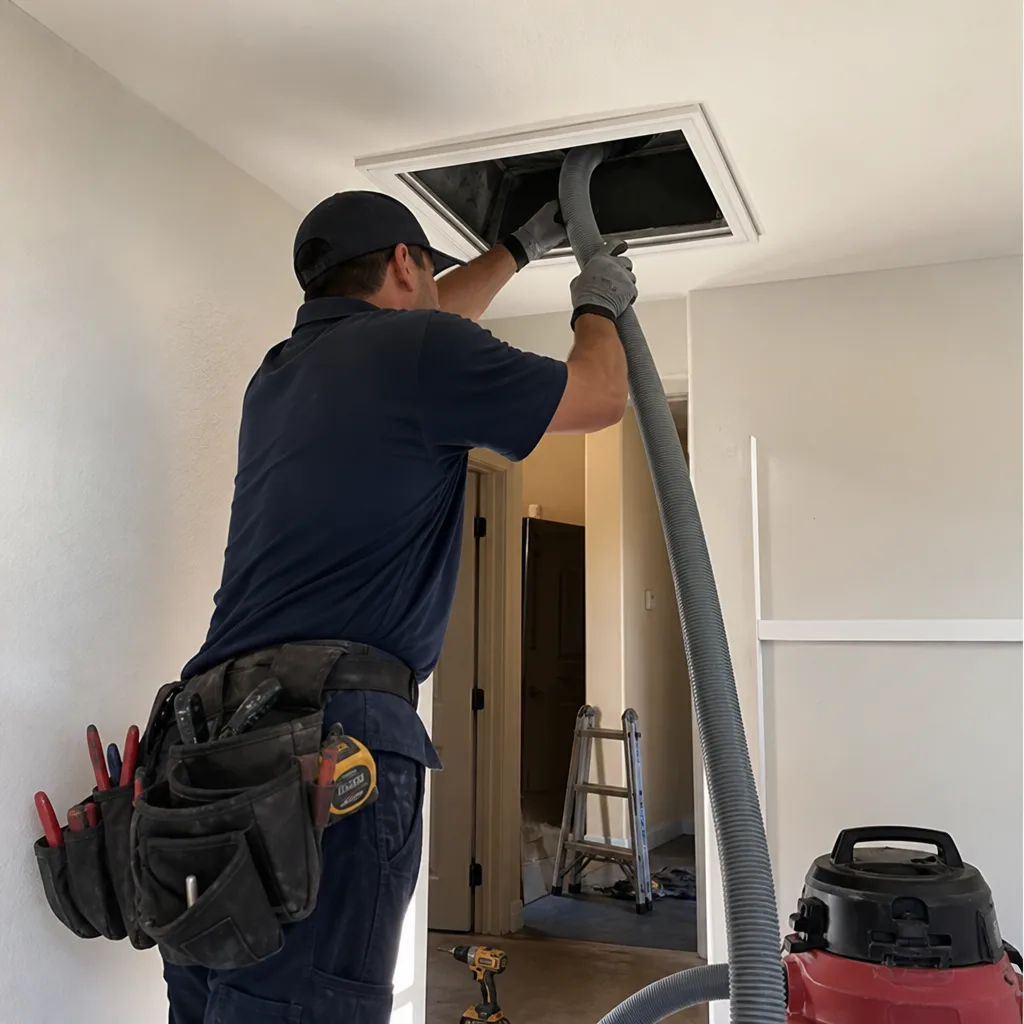
- Method used. Negative-air (source removal) is the industry standard for a real cleaning. Rotary brush systems agitate the duct walls while negative pressure pulls debris out. If the company used a shop vacuum, write that down, because you didn’t get a thorough cleaning.
- Scope. Which parts of the system were cleaned: supply ducts, return ducts, air handler, blower fan, coil, registers? A $99 whole-house cleaning that only touches the returns isn’t a whole-house cleaning.
- Guarantee language. What did the company promise in writing, and for how long? A 365-day written guarantee means something specific. A technician’s verbal “if anything’s wrong, call us” doesn’t mean much unless it’s on paper.
- Photos. Before-and-after photos of the duct interior are part of a verifiable job. If the company doesn’t offer them, ask. If they refuse, log that.
- Price paid. Not the estimate. The final invoice amount.
At Hollis Air Duct Henderson, every job gets a written price before work begins and is covered by the 365-Day Done Right Promise-learn more in our Air Duct Cleaning Permits, Codes & Inspections in NV: What You Need to Know. If the work fails within a year, we come back and make it right at no charge, including a free second visit. That’s the kind of guarantee language worth having in your log, because it says exactly what happens and how long the obligation lasts. Vague promises don’t hold up in a dispute. Written terms do.
Using Your Log When Getting Quotes
Here’s where the whole system pays off. When you’re comparing quotes for duct cleaning, duct sealing, or HVAC service in Henderson, your maintenance log gives you something most homeowners don’t have: documented evidence of your system’s actual condition and service history.
When a contractor tells you the ducts are “packed with dust” or “have visible mold,” you can check that against your own semi-annual inspection notes. If your log shows clean boots and stable dust levels for three years, a dire-sounding quote deserves more questions. If your log shows worsening accumulation and you’ve already had two firms do partial cleanings, you have grounds to demand a real negative-air job with before-and-after photos.
A log also eliminates a common upsell: the “you’re overdue” pitch. Without records, a contractor can tell you your ducts haven’t been cleaned in a decade and you have no way to refute it. With a log, you can say, “Negative-air cleaning performed by Hollis Air Duct Henderson in March 2023, 365-Day Done Right Promise in writing. Here’s the invoice.” That changes the conversation immediately.
Finally, a log helps you compare apples to apples on method. When one company quotes $349 and another quotes $800 for “duct cleaning,” your log tells you what method you’ve had before, whether it worked, and what questions to ask about scope. Price without method is meaningless. Your log forces the conversation back to what actually matters.
Common Mistakes to Avoid
- Changing the filter silently and not logging it. A filter change with no record is a missed data point. In Henderson’s dust environment, filter replacement frequency is your single best indicator of what’s happening in the ducts, and you lose that signal if you don’t write it down.
- Using a filter that’s too restrictive. MERV 16 filters in a residential system that was sized for MERV 8 will choke airflow in Henderson’s extreme cooling load. The coil freezes, the system runs longer, and your energy bill climbs. Log the MERV rating so you can see the correlation.
- Assuming “duct cleaning” means the same thing from every company. A shop-vac on a register is not the negative-air method. If your log says the last company didn’t use negative air and the dust came back in six months, that’s not a reason to skip cleaning. It’s a reason to demand a real source-removal job.
- Waiting until you see dust on the vents to act. By the time dust is visibly coating your registers between cleanings, the duct interior has already been accumulating for months or years. Your semi-annual boot inspection should catch it before that point.
- Not checking the dryer vent as part of your routine. Henderson’s dry air means lint doesn’t clump from humidity, but it still accumulates, and a clogged dryer vent is a genuine fire hazard. Add an annual dryer vent cleaning in Henderson to your calendar as a separate line item.
- Accepting a quote without asking about guarantee terms. If a company won’t put a guarantee in writing, your log won’t save you. The 365-Day Done Right Promise at Hollis Air Duct Henderson is the standard we hold ourselves to: if it’s not done right, we make it right, backed in writing on every job.
- Treating the log as optional. The checklist isn’t a chore. It’s a record. A homeowner with three years of logs can spot a failing system, negotiate from strength, and catch air quality declines before they become health concerns. A homeowner with no logs is swinging in the dark.
When to Call a Professional
Some things on the checklist are clearly DIY. Filter changes, grille wiping, and visual boot inspections are all safe for a homeowner. But there’s a line, and crossing it means calling a professional. Call a pro if you see visible mold growth inside the boots or ductwork, if there’s evidence of rodent or insect infestation in the returns, if you notice a persistent musty odor that doesn’t clear after filter changes, or if airflow from multiple rooms drops sharply without explanation. Also call if your ducts haven’t been cleaned in 5 or more years and you’re noticing dust accumulation at the registers within days of cleaning. Hollis Air Duct Henderson offers free estimates in Henderson, and you can reach a live person at (775) 383-5847.
If you’re using the maintenance log properly, you’ll know when you’re at that point. The log doesn’t tell you to call. It tells you when the data says it’s time.
Frequently Asked Questions
Whole-home air duct cleaning in Henderson typically runs between $400 and $900 for a standard single-family home, depending on square footage, number of systems, and the level of debris present. A smaller condo or single-story home on the low end; a two-story with vaulted ceilings and multiple returns on the high end. Any price below $200 for a whole-home job should raise questions about method and scope. The negative-air method with rotary brush agitation is the standard for a real source-removal job, and it costs more than a shop-vac pass. Call (775) 383-5847 for a written estimate. The price is the price, and it doesn’t move at the door.
Cheaper quotes usually reflect less work, not the same work at a discount. A low quote may cover only the supply ducts and skip the return side, the air handler, the blower, and the coil. It may use a vacuum that doesn’t create negative pressure, so dust gets stirred up but not actually removed. Or it may be a teaser price that becomes a much larger invoice once the van is in the driveway. That’s the reputation this trade carries, and it’s why Hollis Air Duct Henderson writes the price down before any work starts. The quote is the invoice. Call (775) 383-5847 and ask what’s included before you say yes to anything.
Ask for before-and-after photos of the duct interior, taken from the same access points. A legitimate cleaning with negative-air equipment should show a visible difference: dust that coated the duct walls before the job and clean sheet metal after. You should also receive a written scope that lists exactly what was cleaned: supply ducts, return ducts, air handler, blower, coil, registers. If a company can’t or won’t provide photos and a written scope, you’re relying on trust with no evidence. At Hollis Air Duct Henderson, the job isn’t done until you’ve seen the proof and the work is covered by the 365-Day Done Right Promise in writing.
Every 3 to 5 years is the right range for most Henderson homes, with the shorter end for homes with pets, smokers, active construction nearby, or severe allergy concerns. The desert dust load is higher here than in many climates, so the 5-year mark is not a safe baseline for every household. Your semi-annual visual inspections should drive the timing. If your return grilles and boots are accumulating visible dust within months of cleaning, you’re probably at the 3-year mark, not the 5-year one. Use your log, not the calendar, to decide.
You can wipe boot openings and register covers, but a shop vacuum doesn’t create the negative pressure needed to actually remove debris from the full duct run. Duct interiors extend far beyond what you can reach from a register, and the dust that matters is the dust deeper in the system. A professional negative-air setup pulls air through the entire duct network while a rotating brush dislodges adhered particles. For a homeowner in Henderson dealing with fine desert silt, a DIY pass is usually a waste of a Saturday and a false sense of clean.
Yes, and it comes down to the dust. Henderson’s desert environment produces a fine, dry, abrasive dust that behaves differently from the humid-climate dust in most of the country. It infiltrates homes through every opening, loads filters faster, and settles in duct interiors in a way that can harden into a film if left for years. A good Hollis Air Duct Henderson home service plan accounts for that specific load by pairing filtration with regular inspection. The desert is hard on systems. The checklist and the log are how you keep a record of that wear instead of guessing at it.
The Bottom Line
A real air duct cleaning maintenance checklist for Henderson isn’t a one-page reminder to change your filter. It’s a record-keeping system that tracks the monthly filter log, the semi-annual visual inspection, and the professional negative-air cleaning with the same discipline you’d use for a car’s maintenance history. Written down, that log gives you leverage when getting quotes, early warning when air quality declines, and confidence that the work you paid for actually happened. Keep the log, check the boots, and explore our more guides & resources or call (775) 383-5847 when the data says it’s time.
Written by Roy Castellanos, Owner at Hollis Air Duct Henderson, serving Henderson since 2004.
See the difference
 Before
 After
After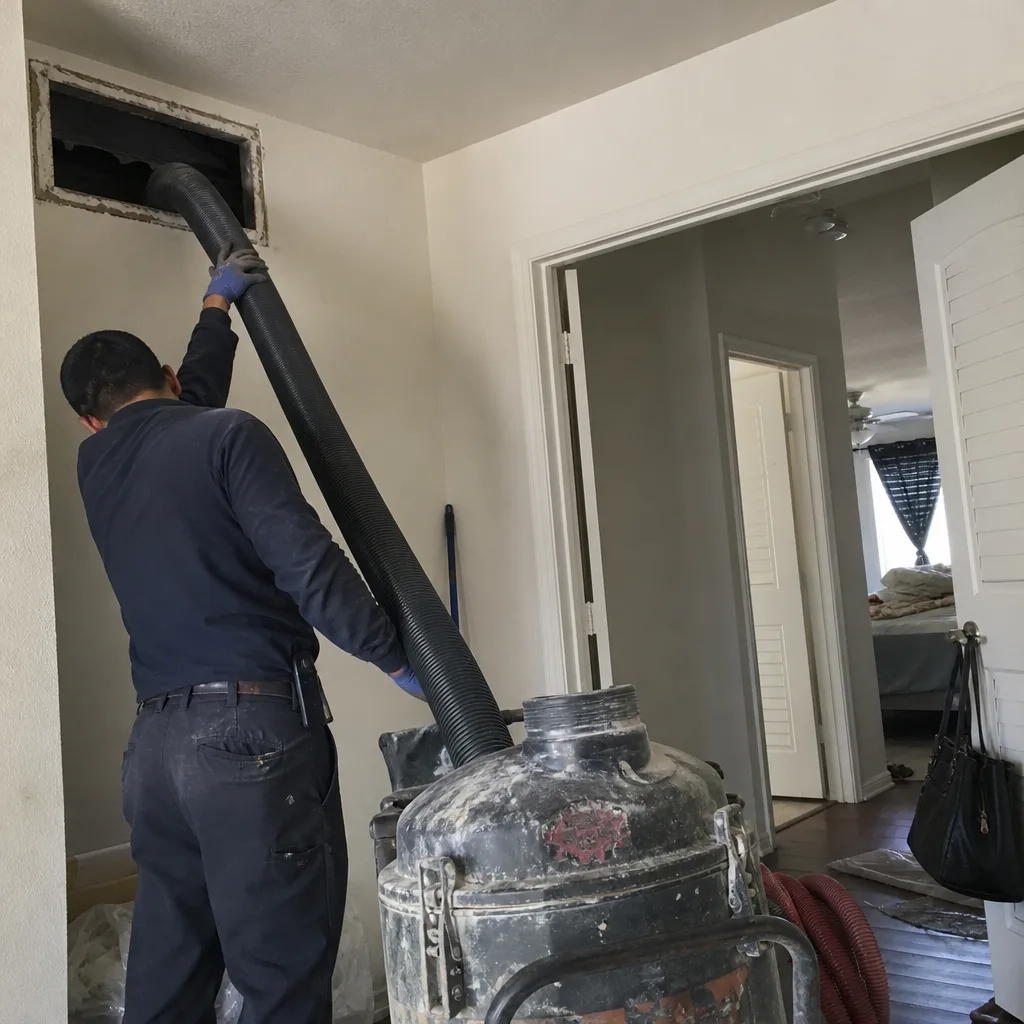 Before
 After
After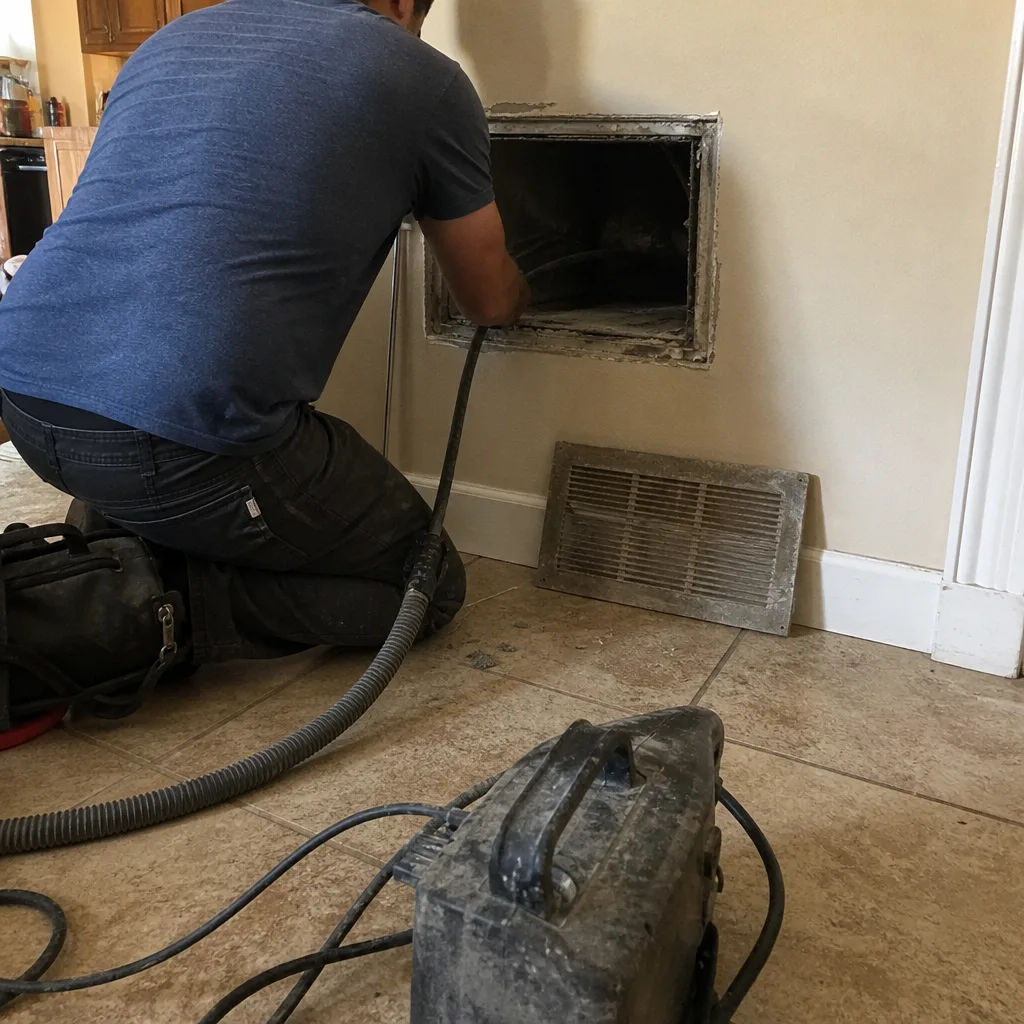 Before
 After
After