
Last updated October 15, 2026
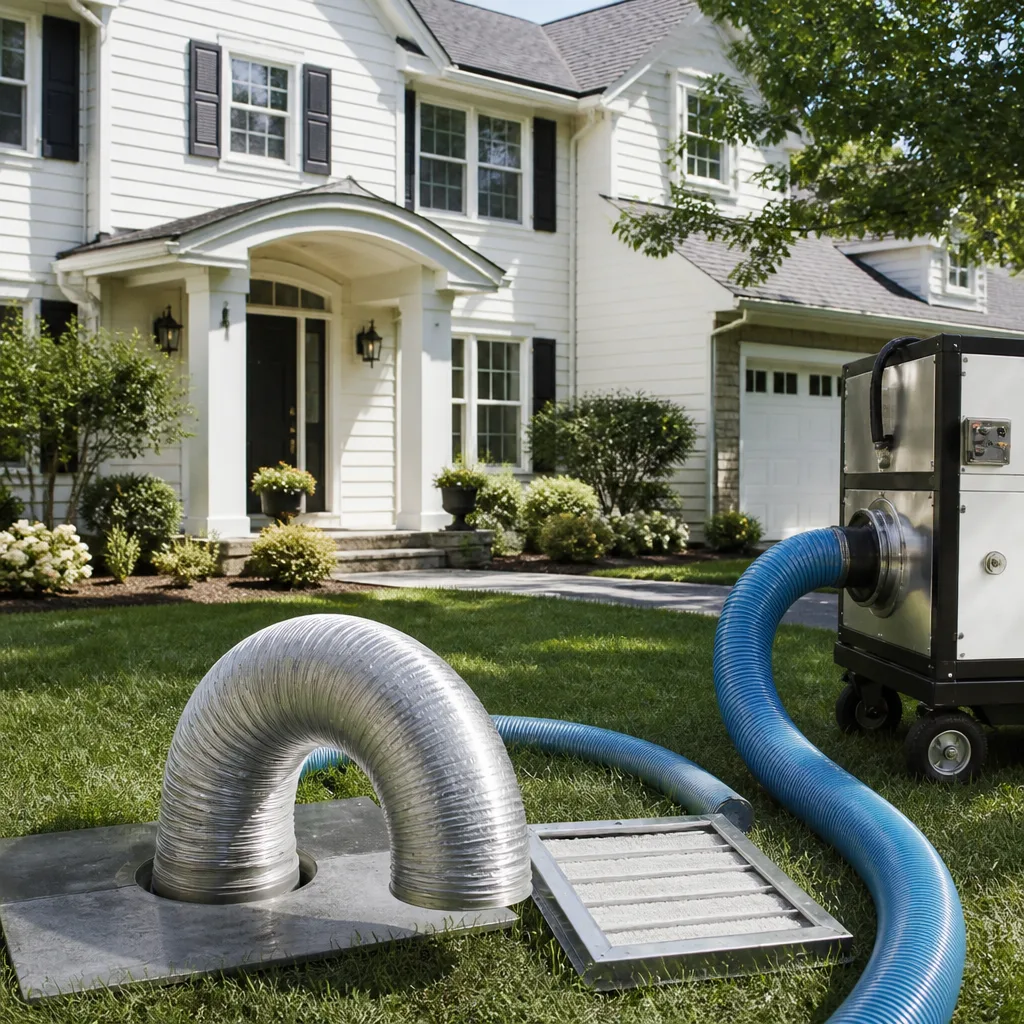 Whole-home duct cleaning
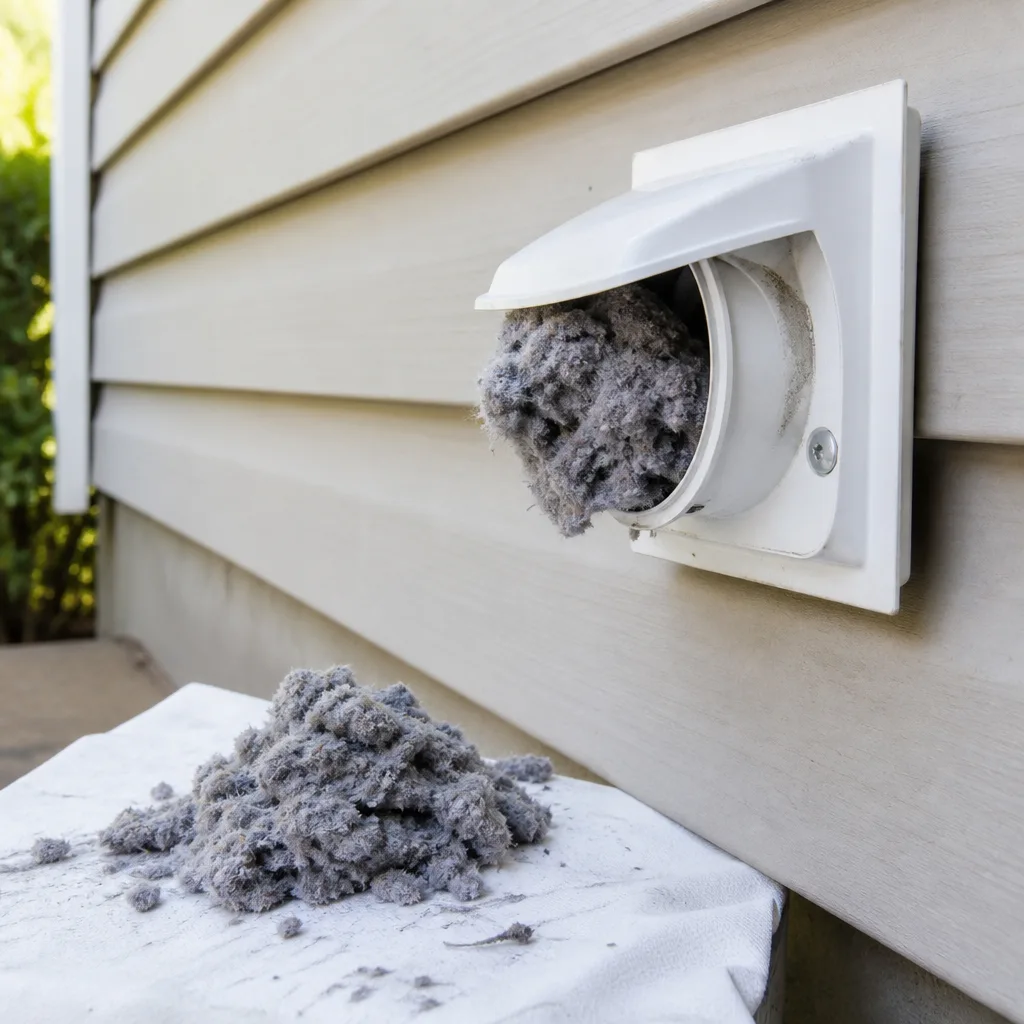 Dryer vent cleaning
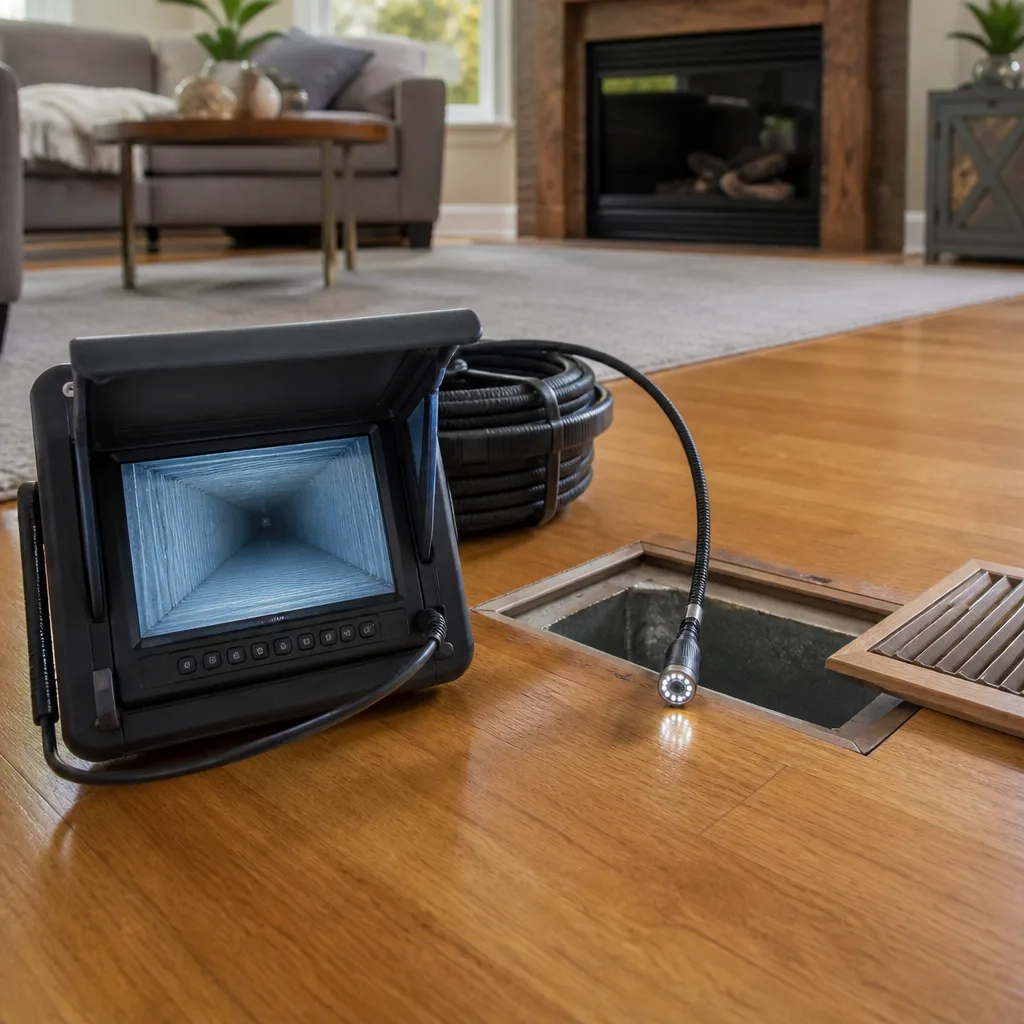 Camera inspection
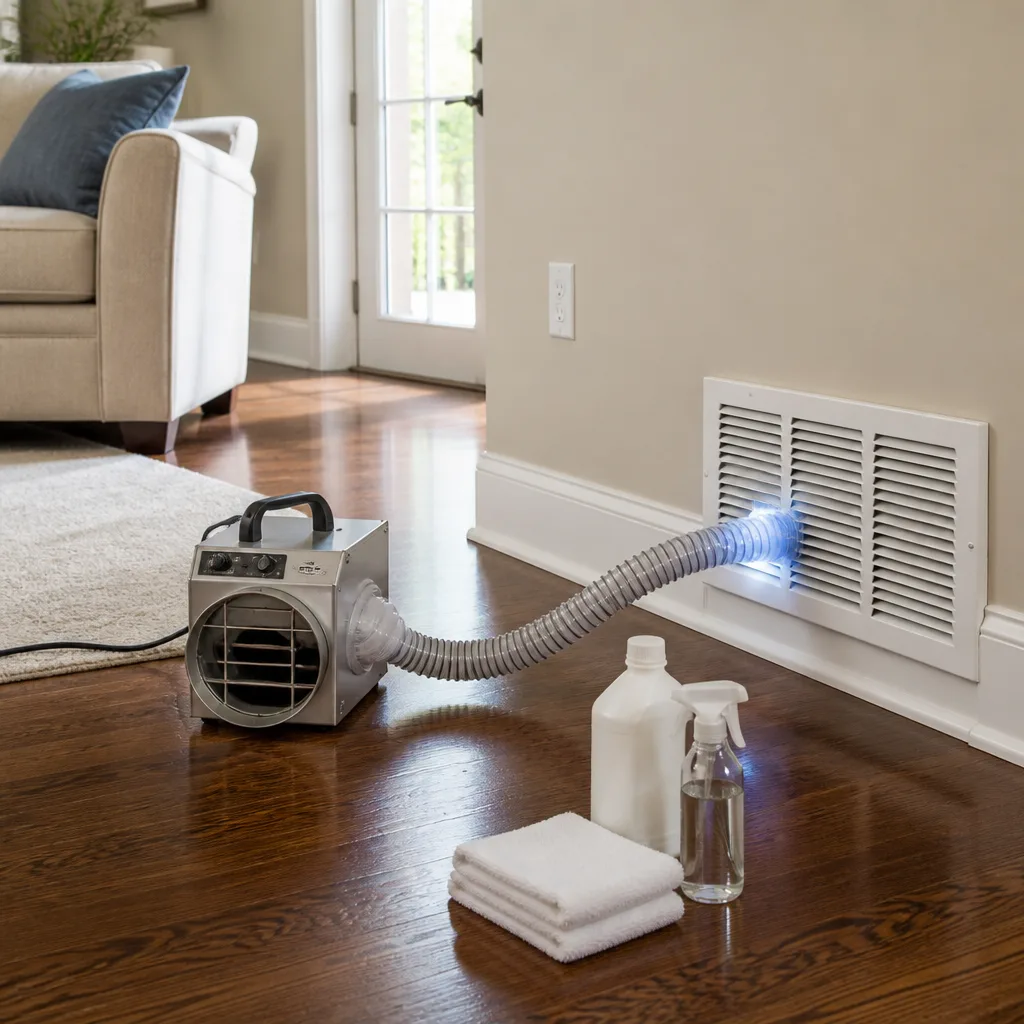 Sanitizing & deodorizing
Whole-system duct and dryer vent check with before-and-after photos - you see exactly what came out of your vents
That "$99 whole-house special" is a bait ad - the real number appears once they are in your hallway, or the "clean" is a shop-vac at the register. We photograph the inside of your ducts before and after instead.
Air Duct Cleaning Permits, Codes & Inspections in NV: What You Need to Know
Most homeowners in Henderson assume a duct cleaning is just a cleaning. Then a technician pops his head out of the attic and says he found a collapsed duct section he can replace “while he’s in there.” What he’s really saying is that your no-permit service call just turned into work that Clark County building code may require to be inspected. And most people never realize the line was crossed until a home inspector flags it three years later at resale. This guide draws that line clearly, so you know exactly what requires a permit in Nevada, what doesn’t, and what to ask before anyone touches your ductwork. For a deeper dive, see our The Complete Guide to Air Duct Cleaning in Henderson.
Styles & brands we work with
Quick Answer
Standard air duct cleaning does not require a permit anywhere in Nevada, including Henderson and greater Clark County. However, duct sealing, duct replacement, and mold remediation often do require mechanical permits or specific licensing, depending on scope. The distinction matters because unpermitted duct modifications can show up at resale, trigger insurance complications, and leave you holding the bill to fix work that was never inspected.
Table of Contents
- What Air Duct Cleaning Actually Is Under Nevada Code
- When a Mechanical Permit Is Required in Clark County
- How Duct Sealing and Duct Replacement Differ From Cleaning Under Code
- What Mold Remediation in Ductwork Requires in Nevada
- Why Permit History Matters When You Sell a Henderson Home
- How to Ask a Contractor If the Work Requires a Permit
- Nevada Contractor Licensing: What the Numbers Actually Mean
- Common Mistakes to Avoid
- When to Call a Professional
- Frequently Asked Questions
- The Bottom Line
What Air Duct Cleaning Actually Is Under Nevada Code
Air duct cleaning is a maintenance service, not a construction activity. Under Nevada law and Clark County building codes, cleaning means removing accumulated dust, debris, and particulate from the interior surfaces of existing ductwork using mechanical agitation and negative-pressure collection. The key word is “existing.” Nothing is being installed, modified, or structurally altered. That’s why a permit is not required.
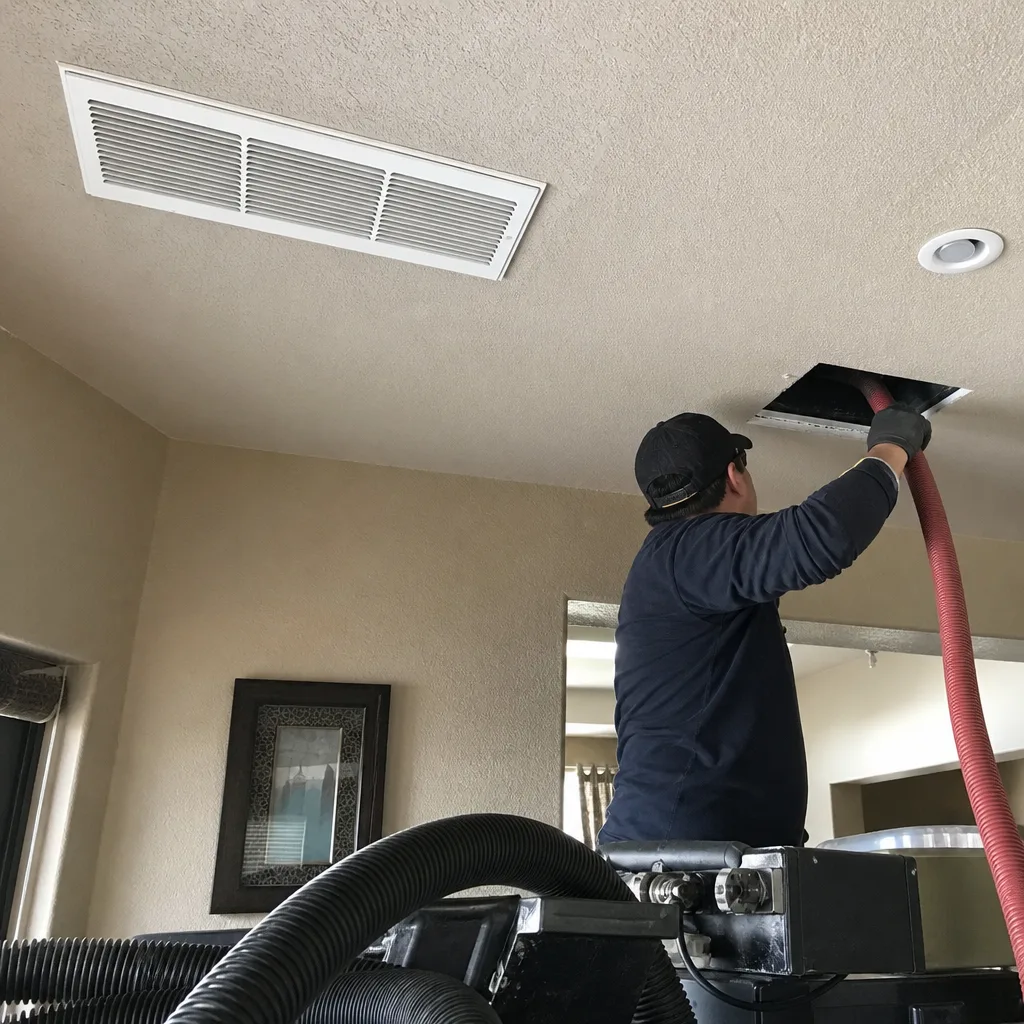
In our experience providing Air Duct Cleaning services to thousands of Henderson homes since 2004, most households have duct systems that hold between 10 and 25 pounds of accumulated dust, pet dander, and construction debris, particularly in homes built during the 1990s and early 2000s boom years. A standard cleaning uses a rotary brush system paired with a negative-air machine to dislodge and extract that material without changing the ductwork itself. The equipment we run on every job includes professional-grade tools from Nikro and Abatement Technologies, which are the same brands commercial crews use in hospitals and office buildings.
Because cleaning doesn’t alter the system, Clark County’s building department treats it the same way it treats carpet cleaning or pressure washing. No mechanical permit. No inspection. No plan review. The contractor still needs a valid Nevada contractor’s license, but the work itself sits outside the permitting process entirely.
That said, there’s a reason this guide exists. The moment a cleaning uncovers a problem that requires repair or modification – a collapsed section, a disconnected boot, a rusted-out plenum – the work crosses from maintenance into construction. And that’s where the rules change fast.
When a Mechanical Permit Is Required in Clark County
Clark County requires a mechanical permit for any work that involves installing, altering, or replacing a building’s mechanical systems. That includes ductwork. The operative language in the code is broad: if you’re modifying the system, you’re modifying the building. Here’s what that looks like in practice.
Work That Requires a Mechanical Permit in Clark County
- Replacing a duct run or trunk line. If a section of flex duct or rigid sheet metal duct is removed and a new section installed, that’s a modification of the mechanical system. A permit is required in Clark County, including Henderson. The same rule applies whether it’s 5 feet or 50 feet.
- Replacing a boot, collar, or plenum connection. These are the metal transition pieces that connect ducts to registers or to the air handler. Replacing them is considered alteration.
- Adding a new register or supply line. Expanding the system to serve a new room or a converted garage means altering the original design. That triggers a permit.
- Modifying or relocating the air handler connection. Anything that changes how the blower distributes air through the home falls under mechanical permitting.
- Installing or replacing duct insulation on a replaced section. If the insulation work is part of a permitted replacement, it’s included in that permit. If it’s standalone, it’s generally covered under the replacement permit scope.
Work That Does Not Require a Mechanical Permit
- Cleaning existing ducts. This is maintenance, as described above.
- Reattaching a duct connection that has come loose. If the duct simply slipped off a boot and the original components are intact, reseating it and replacing the existing fasteners is a repair, not an alteration. Most building officials consider this maintenance.
- Sealing small gaps with duct mastic. This is the gray area we’ll address in detail below. The short version: spot-sealing an existing seam is generally maintenance. Re-sealing the entire duct system or replacing failed sealant may be considered repair work, but not necessarily a permit-triggering alteration. Clark County treats this differently than full replacement.
Here’s the honest version from someone who has done this work in Henderson for over 20 years: the building department is not going to knock on your door because a contractor replaced a 6-foot section of flex duct. But that doesn’t mean the work doesn’t require a permit. The permitting requirement attaches when the work happens, not when someone complains. If a future home inspection raises the question, “was this inspected?” and the answer is no, you’ve got a problem that a phone call to the building department won’t fix retroactively without fees, time, and possibly opening up walls.
How Duct Sealing and Duct Replacement Differ From Cleaning Under Code
Duct sealing sits in a genuinely confusing space in Nevada. Cleaning is clearly exempt. Replacement is clearly not. Sealing falls between them, and the truth is that different building officials in Clark County have interpreted it differently over the years.
What Duct Sealing Is
Duct sealing is the process of applying mastic sealant – a thick, paint-on compound that dries to a rubber-like finish – or specialized tape to the seams, joints, and connections of a duct system. The goal is to stop conditioned air from leaking into attics, crawl spaces, and wall cavities before it reaches the rooms you’re actually trying to heat or cool. In Henderson, where summer attic temperatures routinely exceed 140 degrees and air conditioners run for 6-8 months a year, even a 15% leak rate means you’re paying to cool your attic. Sealing that system properly is one of the highest-value improvements a homeowner here can make.
The Code Distinction
Here’s the distinction that actually matters. Spot-sealing – finding a specific gap at a specific joint and sealing it during a cleaning or service call – is considered maintenance. No permit. Re-sealing an entire duct system as a standalone service is generally treated as a repair to existing work, not an alteration, and most Clark County building officials do not require a permit for it when the ducts themselves are not being replaced. However, if sealing is performed as part of a larger job that includes duct replacement or modification, the entire job falls under the replacement permit.
What does this mean for you as a homeowner? It means the question to ask isn’t “do you need a permit to seal ducts in Henderson?” The better question is: “What exactly are you doing, and does any part of it involve replacing or modifying the ducts?” If the answer is sealing only, no permit is typically required. If the answer is “we need to replace this section and then seal the rest,” the replacement section requires a permit, which means the whole job should be permitted.
Why Contractors Blur the Line
The reason some contractors blur this line is simple economics. Pulling a mechanical permit in Clark County costs money – permit fees, inspection scheduling, time on the job site waiting for the inspector. A contractor who quotes a job without a permit is often $150 to $400 cheaper than one who does it by the book. That savings gets passed to you, and it feels like a deal. Then the work is done, the check clears, and you never think about it again. Until you sell the house.
Hollis Air Duct Henderson doesn’t pull permits for pure duct cleaning in Henderson because none are required. But we also won’t replace a section of duct on the sly and call it cleaning. If a cleaning uncovers damage that requires replacement, we’ll tell you plainly that a permit is required, what it costs, and how the process works. Then we’ll give you a written price for the entire job before any work starts. The Garrison Standard we operate under requires it.
What Mold Remediation in Ductwork Requires in Nevada
Mold changes everything. Not because mold automatically requires a permit – it doesn’t – but because mold remediation in Nevada involves a different set of rules entirely, and they’re not rules most duct cleaners understand or follow.
No Permit, But Specific Protocols
Nevada does not require a specific permit for mold remediation inside ductwork. The work is regulated differently: it falls under environmental health and occupational safety standards, not building code. The Nevada Division of Public and Behavioral Health has published guidance on mold, and the EPA has clear protocols for mold remediation in HVAC systems. The people doing the work need to follow those protocols, but they don’t need a building permit to do it.
What Nevada Actually Requires for Mold Remediation in Ducts
- Source identification first. You can’t remediate mold in a duct if you don’t know why it’s growing there. In Henderson, the cause is almost always one of two things: a condensate leak inside the air handler that’s been dripping into the ductwork, or an unsealed duct pulling humid air from an unconditioned attic or crawl space. Fix the source or the mold comes back.
- Containment during cleaning. The moment you agitate mold inside a duct, you risk releasing spores into the rest of the home. Proper remediation uses negative-air pressure – the same equipment we use from Nikro and Abatement Technologies on large commercial jobs – to capture spores at the source while the cleaning is done.
- Mechanical removal, not just chemical treatment. Nevada guidance and EPA protocols call for removing the mold physically from the surface, not just spraying it with a biocide. The mold has to be scrubbed out, extracted, and the surfaces dried thoroughly. Simply fogging or spraying doesn’t meet the standard.
- Post-remediation clearance. After the work is done, the area should be tested or visually verified to confirm the mold is actually gone. This is the step most duct cleaning companies skip entirely.
Who Can Legally Perform Mold Remediation in Nevada
Nevada does not have a standalone “mold remediation license.” The work falls under the contractor’s existing license classification. A contractor holding a Nevada C-21 license (which covers HVAC work) or a C-1 license can perform mold remediation as part of HVAC work. What they cannot do is present themselves as a “certified mold specialist” unless they hold an industry certification through a recognized organization, and even then, the underlying work is governed by their contractor’s license.
What this means for a Henderson homeowner: if a duct cleaner tells you they found mold and can treat it, ask two questions. First, what’s your contractor’s license number, and does it cover mold remediation within HVAC systems? Second, what’s the source of the moisture? If they can’t answer both, end the conversation. Mold in ducts that’s “cleaned” without fixing the moisture source is a guarantee that you’ll be paying for the same remediation again in 12 to 24 months.
Why Permit History Matters When You Sell a Henderson Home
Henderson is a disclosure-friendly market. Nevada requires sellers to disclose known material defects in the home, and a growing number of buyers in the Las Vegas Valley are hiring inspectors who specifically look for evidence of unpermitted work. Duct modifications are high on that list, and here’s why.
What a Henderson Home Inspector Will Flag
When a home inspector walks a Henderson property, they look at the visible portions of the duct system: the runs in the attic, the plenum connections, the boots at the registers. If they see ductwork that doesn’t match the rest of the system – newer flex duct in an older system, fresh mastic at joints, a register in a location that seems off – they’ll note it. The note goes one of two ways.
If the work was permitted, the note usually says: “Duct replacement observed. Recommend confirming permits were pulled.” Pull the permit, show the inspection records, done.
If the work was unpermitted, the note says: “Duct modifications observed. No permit on file. Recommend further evaluation by licensed HVAC contractor.” That sentence just cost you time, money, and potentially the buyer.
The Three Real Costs of Unpermitted Duct Work at Resale
- Inspection money. You’ll pay an HVAC contractor to assess the work and write a report saying it’s safe. In Henderson, that runs $150 to $400 depending on the scope.
- Lender complications. If the buyer is using an FHA or VA loan, unpermitted work can delay the entire loan. Underwriters sometimes require the work to be retroactively permitted, which means opening walls or ceilings if the work is hidden. That’s a $500 to $2,000 problem, not a $150 report.
- Negotiation leverage. A buyer who sees unpermitted duct work knows you have a disclosure problem. They’ll ask for a credit to cover the cost of retroactive permitting, and you’ll likely give it to them because the alternative is relisting the home with the same issue.
We’ve walked into enough Henderson attics to know what unpermitted work looks like. It’s rarely dangerous work, but it’s always undocumented work. And undocumented work is what creates problems at resale. The permit isn’t about the government checking a box. It’s about the paper trail that proves the work was done to code and inspected by someone whose job is to catch mistakes.
One more Henderson-specific note: many homes in Green Valley, Anthem, and MacDonald Ranch were built during heavy construction periods in the 1990s and 2000s. Builders sometimes routed ducts in ways that made future access difficult. If a previous owner modified ducts to improve airflow or fix a problem, there’s a good chance the work was done without a permit because the original routing made the permitted alternative expensive. Knowing this before you buy or sell gives you a negotiating position. Not knowing it gives the other side one.
How to Ask a Contractor If the Work Requires a Permit
Most homeowners don’t ask this question because they’re afraid of sounding uninformed. The opposite is true. A contractor who hears this question knows they’re talking to someone who won’t get rolled. Here’s exactly how to have the conversation.
The Script
- Before any work starts: “Can you tell me if any part of what you’re proposing requires a permit in Clark County?”
- If the answer is no: “Can you confirm that in writing on the estimate?” A legitimate contractor will write “no permit required for this scope” on the quote without hesitation.
- If the answer is yes: “Who’s pulling the permit – you or me – and what does it add to the total?” In Nevada, the contractor’s license is tied to the permit, so the contractor should be the one pulling it.
- If the answer is hedging: “I’d like to verify that with the building department before we proceed.” Then call the Clark County Building Department. They’re helpful, and this is an easy question for them to answer.
What the Right Answer Sounds Like
A contractor who knows the Nevada code will answer clearly and quickly. “No, this is just cleaning, no permit needed.” Or “Yes, we’re replacing a section of trunk line, so we’ll need a mechanical permit. I’ll pull it, you’ll pay for it as a line item on the estimate, and we’ll schedule the inspection after the work is done.” That’s the whole answer. No hedging, no “well, technically…”, no “I’ve been doing this for 30 years and never pulled a permit.”
Roy Castellanos, our owner at Hollis Air Duct Henderson, has trained our technicians to answer this question the same way every time: with the truth, in plain language, before the work starts. If a permit is required, you’ll see it as a line item on your written estimate and you’ll have the permit number before we start pulling old duct out of the attic.
Nevada Contractor Licensing: What the Numbers Actually Mean
Every contractor performing duct work in Henderson needs a license issued by the Nevada State Contractors Board. The license classification tells you what that contractor is legally allowed to do. Here’s what you need to know, stripped down to the useful parts.
License Classifications That Cover Duct Work
- C-21: Plumbing and Heating. This license covers the installation, alteration, and repair of heating and cooling systems, including ductwork. A C-21 holder can clean, seal, replace, and repair ducts, and can pull mechanical permits for that work. This is the classification you want to see for a full-service duct company.
- C-1: Plumbing and Heating Contracting. The broader classification that also covers duct work within HVAC systems.
- A-10 or B: General Engineering/Building. These cover new construction and major remodeling. A general contractor can include duct work as part of a larger permitted project, though they often sub it out to a C-21 holder.
A lot of duct cleaning companies in the Vegas Valley hold what’s called a limited cleaning license or operate under a maintenance classification. That’s perfectly legal for cleaning. It’s not legal for replacement or modification. Knowing the difference is the whole point of this guide.
When you call any duct company in Henderson, ask for their license number and verify it on the Nevada State Contractors Board website. It takes 90 seconds. The license holder’s name should match the name on the estimate and the name on the van. If any of those three don’t match, that’s a red flag you can see from the driveway.
Hollis Air Duct Henderson is independently owned and operated under the Garrison Partners umbrella. Our work in Henderson is done by background-checked, uniformed technicians who carry the proper licensing for the work they perform. We don’t blur cleaning and replacement. If the scope changes mid-job, the conversation happens before the change, not after.
Henderson Climate and Why It Matters for Duct Work
The Mojave Desert climate affects every duct system in Henderson in ways homeowners in other parts of the country never deal with. Attic temperatures in July and August routinely hit 140 degrees. That heat bakes flex duct, dries out mastic sealant, and causes the plastic outer jacket on flexible ductwork to become brittle years earlier than it would in a milder climate. It’s common for Henderson homes to need duct attention at the 15 to 20-year mark, where a home in Portland might get 25 or 30 years out of the same material.
The dry air also hides leaks. In a humid climate, a duct leak shows up as condensation, water stains, or mold. In Henderson, the air is so dry that leaks are invisible until you see your power bill. That’s why we recommend Henderson homeowners have their ducts inspected every 3 to 5 years, especially if they’ve owned the home for more than a decade and have never looked inside the ductwork at all. A dryer vent cleaning in Henderson is also worth doing on a similar timeline, since the desert’s fine dust clogs dryer vents faster than most homeowners expect.
Common Mistakes to Avoid
- Letting a technician replace a duct section without a permit. The work may be done well, but you’ve just accepted an unpermitted modification to your home’s mechanical system. You’ll discover the cost of that decision when you sell.
- Assuming mold in ducts is covered by a cleaning license. Mold remediation inside ductwork requires moisture-source correction and EPA-protocol remediation. A company that cleans ducts without addressing why the mold grew is selling you a repeat visit.
- Paying for duct sealing without knowing what’s actually being sealed. Some contractors “seal” ducts by spraying a product into the system without ever finding the actual leaks. Proper duct sealing in Henderson involves opening the system, sealing the real joints with mastic, and verifying the work. If the quote doesn’t describe it that way, ask questions before signing.
- Hiding unpermitted work from a buyer. Nevada’s seller disclosure form asks about known defects and unpermitted work. Failing to disclose can leave you on the hook for damages after the sale. The truth on the disclosure is always cheaper than the lawsuit.
- Choosing the contractor with the lowest number without asking the permit question. The cheapest quote on a duct replacement in Henderson is often cheap precisely because it doesn’t include permit fees. You’re not saving money; you’re deferring it with interest.
- Waiting until the ducts are full of dust or damaged to get a professional look. In Henderson’s dry climate, duct problems are invisible for years. An inspection every 3 to 5 years catches failures before they become replacements.
When to Call a Professional
Call a professional duct company in Henderson if you notice weak airflow in one or more rooms, visible dust building up around registers within days of cleaning, a sudden and sustained increase in your cooling bill during a normal Henderson summer, or unusual sounds coming from the ductwork when the system cycles on. These are all signs that something in the system has changed, and changes in ductwork don’t fix themselves.
If you’re buying a home in Henderson and the inspection report flags duct modifications with no permit record, call before you close. A licensed contractor can tell you in 30 minutes whether the work is sound, what it would cost to permit retroactively if needed, and whether you should ask the seller for a credit. Hollis Air Duct Henderson offers free estimates in Henderson – call (775) 383-5847 and we’ll give you a written price and a straight answer about what the work requires.
Frequently Asked Questions
No. Air duct cleaning – the mechanical removal of dust and debris from existing ductwork using brushes and negative-air equipment – is considered maintenance under Nevada law and Clark County building code. No mechanical permit is required anywhere in the Las Vegas Valley, including Henderson. This applies whenever the work is limited to cleaning existing ducts without modification or replacement.
In Henderson, a full-system air duct cleaning for a typical 2,000 to 2,500 square foot home runs between $350 and $550. Larger homes or systems with significant buildup can run $550 to $800. Companies quoting under $300 for a full system are almost certainly quoting a per-vent price that will balloon once the technician arrives. A legitimate quote is a flat, whole-system price in writing before any work starts.
Sealing only, performed on existing ducts without replacement, generally does not require a mechanical permit in Clark County. Spot-sealing gaps at joints and seams is treated as maintenance. If duct sealing is part of a larger job that includes replacing duct sections, the replacement triggers the permit requirement, and the permit covers the entire job. Always ask the contractor to state in writing whether the proposed scope includes any replacement or modification.
Unpermitted duct replacement becomes a problem when you sell the home or make an insurance claim related to the HVAC system. A buyer’s home inspector will likely flag the modified ductwork, and a lender may require retroactive permitting before approving a loan. Retroactive permits in Clark County require opening up access points for inspection, which costs homeowners $500 to $2,000 depending on scope. The work itself may be fine, but the missing paperwork still costs money to fix.
In the Las Vegas Valley, every 3 to 5 years is a reasonable interval for most homes. The dry climate and constant dust mean particulate accumulates faster here than in humid climates, but the system also stays drier, which reduces mold risk for most households. Homes with pets, recent construction, or residents with allergies may need more frequent attention. If you can’t remember the last time the ducts were cleaned, it’s time to call for an inspection.
Dryer vent ducts are a separate system from HVAC ductwork and are generally not subject to mechanical permits. Replacing a standard 4-inch dryer vent duct is considered a repair or maintenance item and does not require a permit in Clark County. However, the work should be done with rigid metal duct, not flexible foil or vinyl, to meet fire safety standards. Hollis performs dryer vent replacements in Henderson without permits when it’s a straight replacement, and we’ll tell you if your existing vent routing is non-compliant.
The Bottom Line
Air duct cleaning in Henderson requires no permit under Nevada code. Duct replacement, modification, and sometimes sealing as part of a replacement job, do require mechanical permits in Clark County. Mold remediation follows environmental protocols and licensing rules rather than permit requirements, but demands contractor credentials and moisture-source correction. The simplest way to protect yourself is to ask one question before any work starts: does any part of this proposal require a permit? For more guides & resources on protecting your home and HVAC system, visit our blog. The answer should be clear, fast, and in writing. If it’s not, you’re talking to the wrong contractor.
Hollis Air Duct Henderson is here to give you straight answers and written prices before work begins. Call (775) 383-5847 for a free estimate on duct cleaning, dryer vent work, or any question about the air moving through your Henderson home.
Written by Roy Castellanos, Owner at Hollis Air Duct Henderson, serving Henderson since 2004.
See the difference
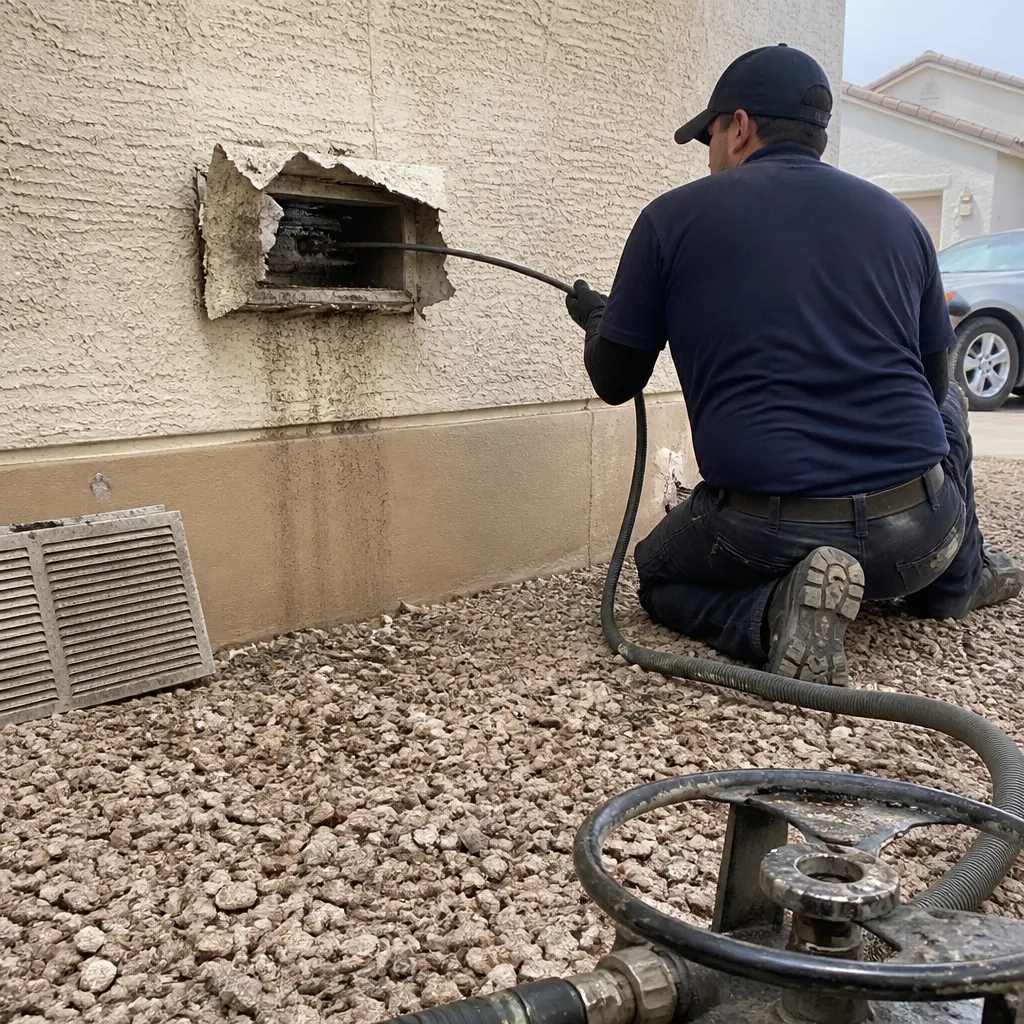 Before
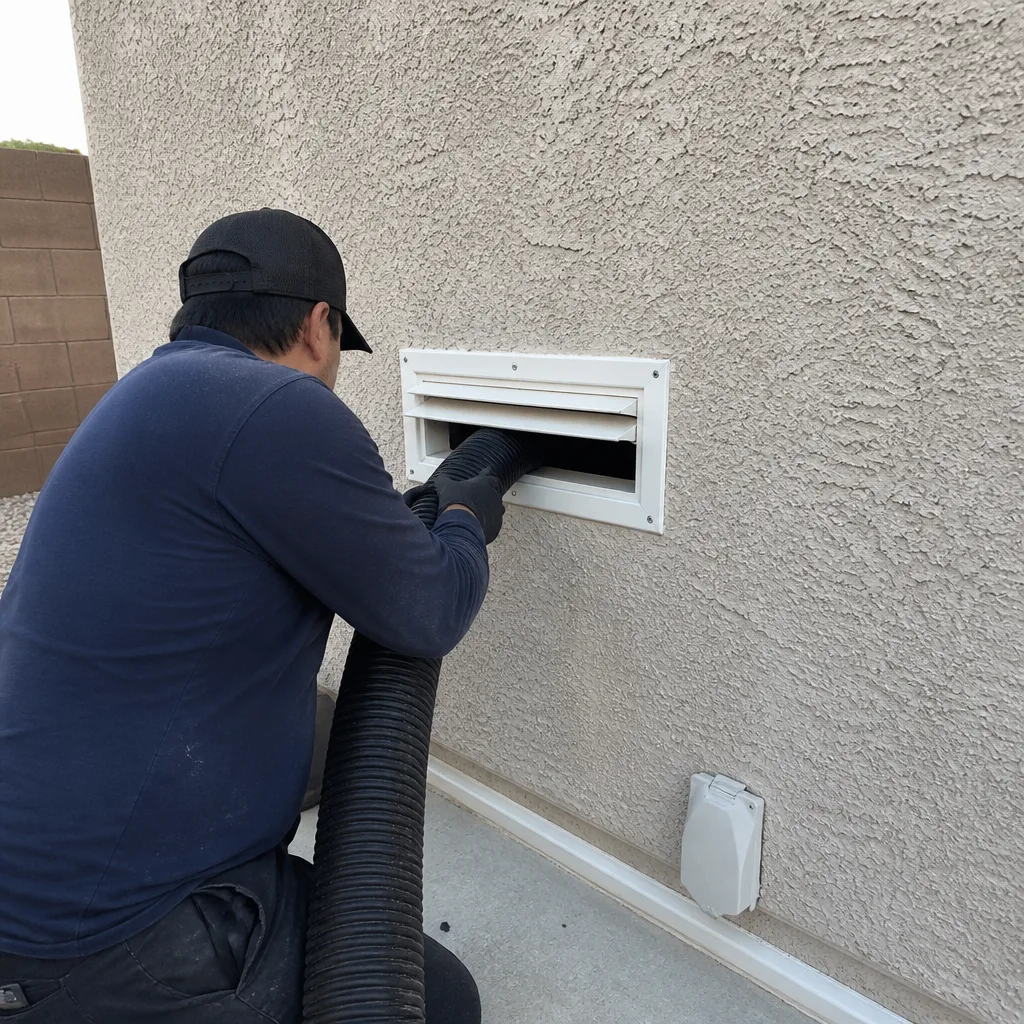 After
After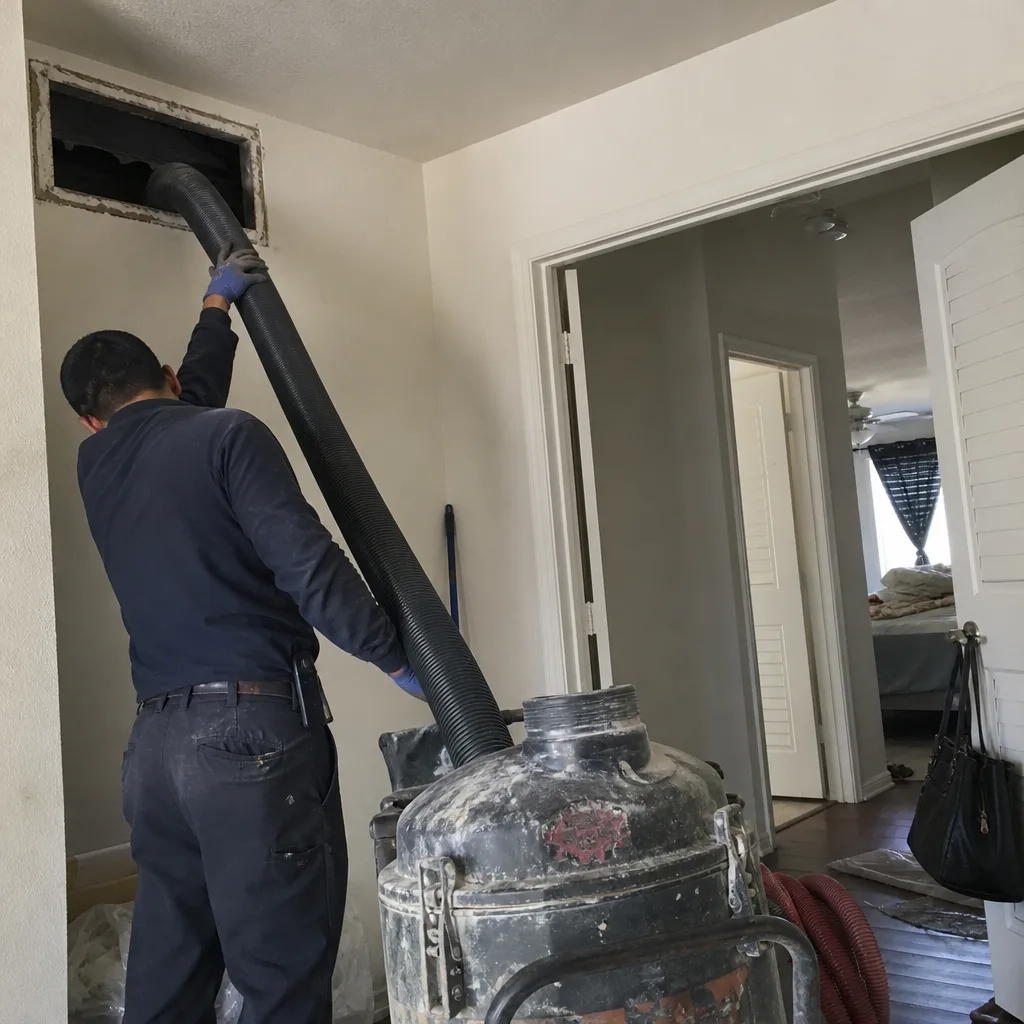 Before
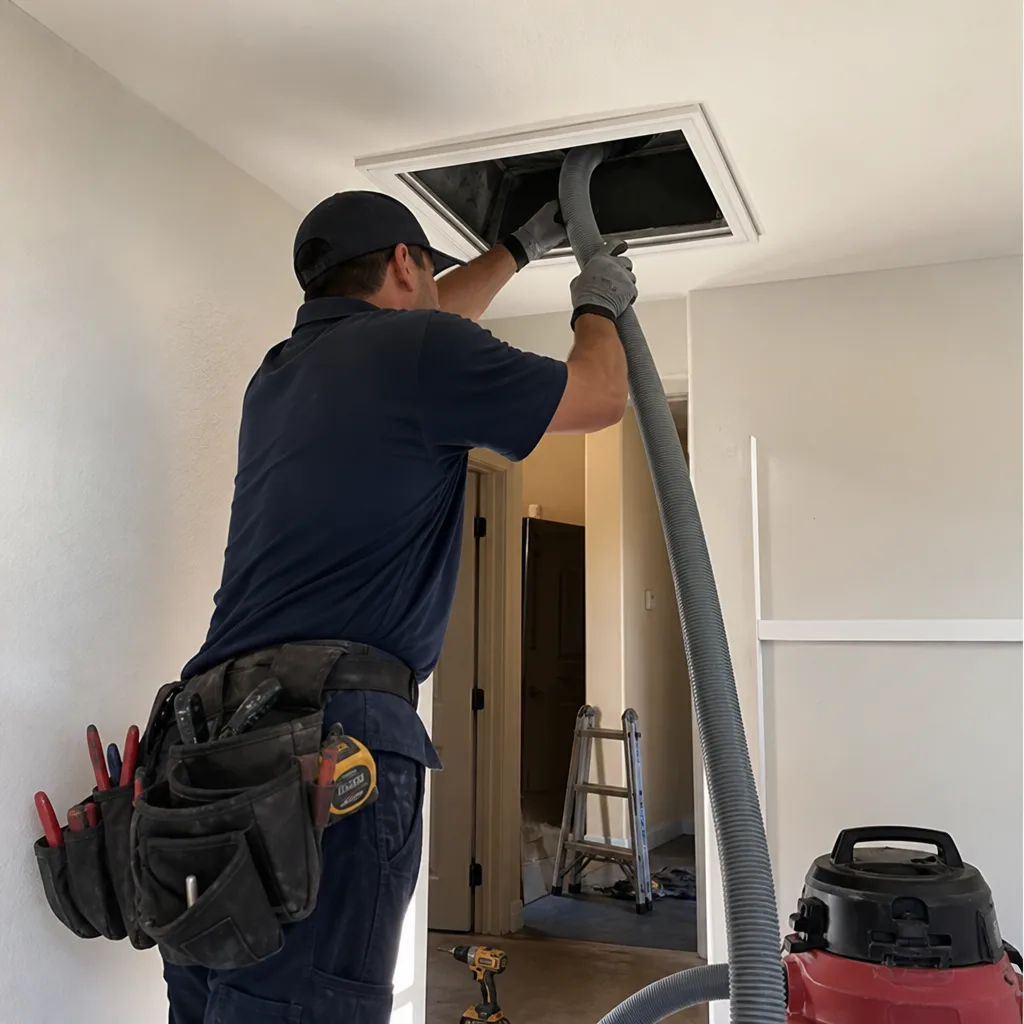 After
After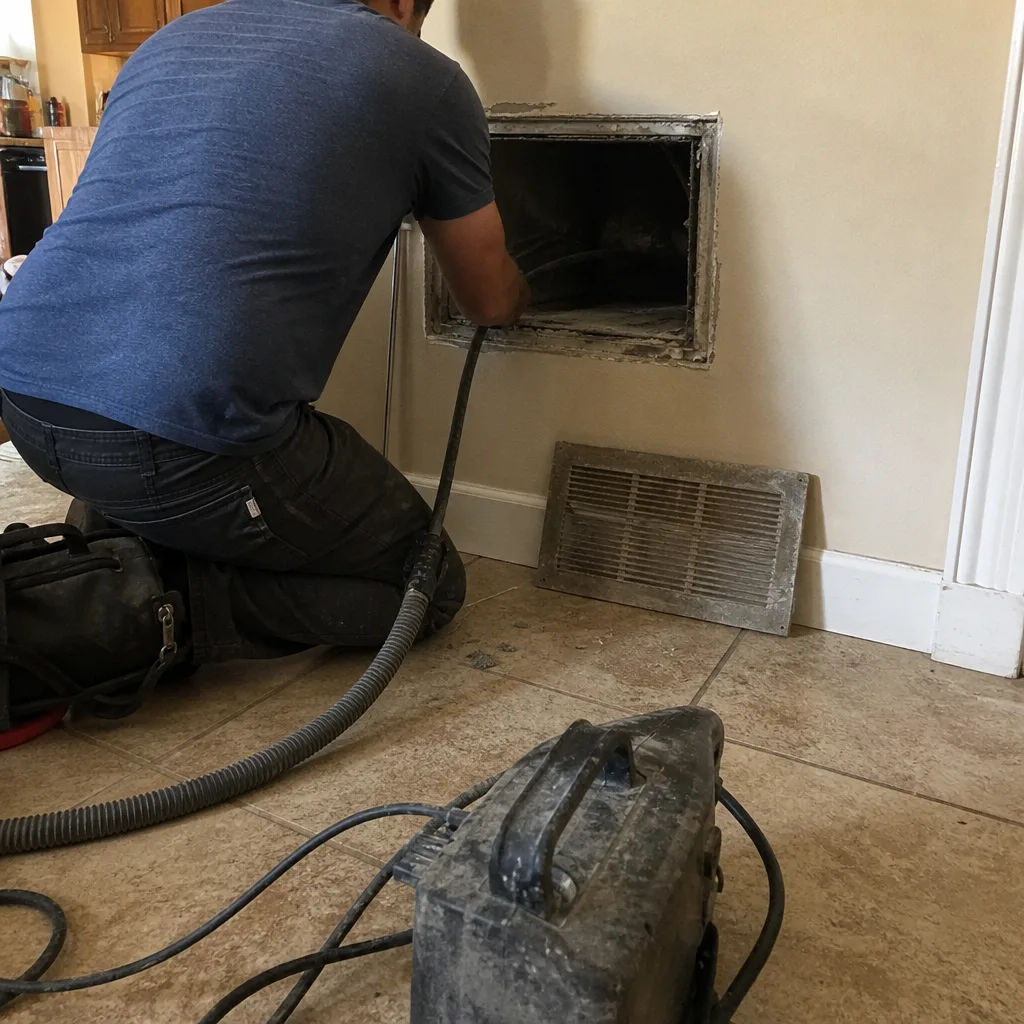 Before
 After
After